What owners and general contractors need from a specialized construction partner
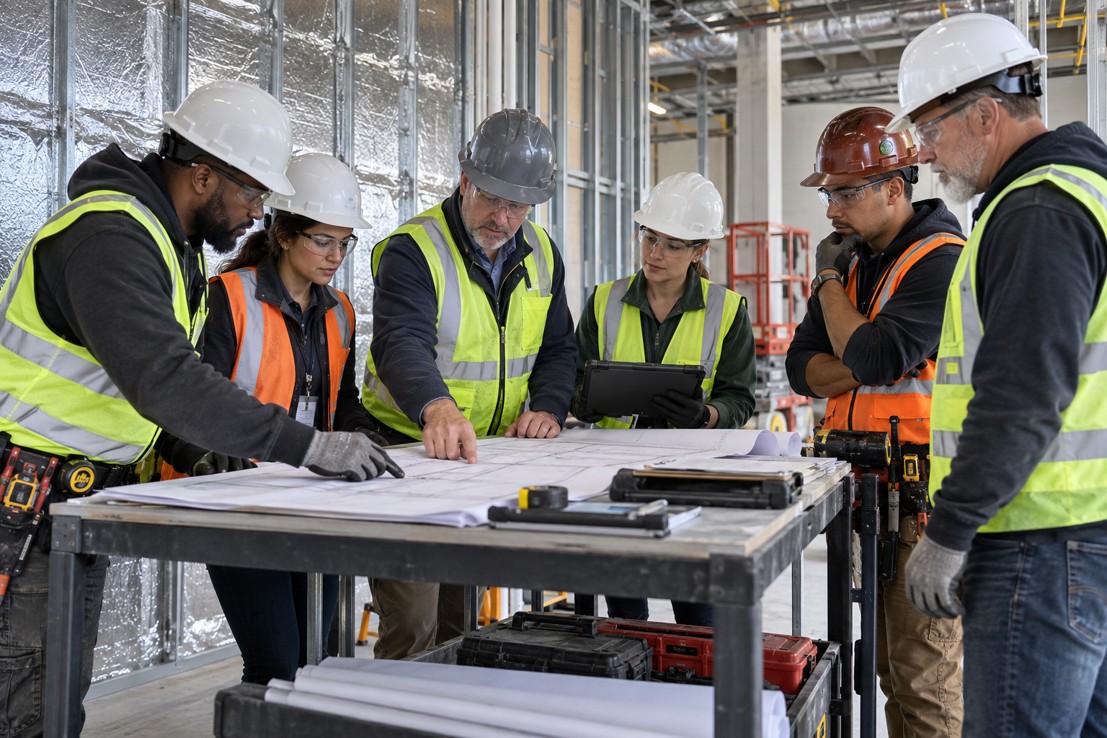
Early coordination brings the owner, contractor, security team and installers into one construction plan
Demand for secure environments is moving beyond a narrow set of purpose-built rooms. Federal modernization, distributed mission work, research, data infrastructure and regulated operations are creating more projects that need controlled access, acoustic privacy, electromagnetic protection and dependable building systems.
The market indicators are substantial. The General Services Administration reports approximately $74.6 billion in annual federal facilities and construction spending. The Congressional Budget Office describes the Department of Defense fiscal year 2026 request of $961 billion as one of the largest inflation-adjusted defense requests of the past 50 years. In September 2026, the department also announced a Secure Space Network intended to deploy approximately 50 mobile Sensitive Compartmented Information Facilities, commonly called SCIFs, so more suppliers can perform classified work. [1, 2, 3]
For owners, general contractors and design teams, the message is practical: more work will require specialized coordination, faster delivery and documentation that supports inspection and approval. Surface Solutions helps turn those requirements into constructible, integrated secure spaces.
Secure spaces depend on coordinated systems
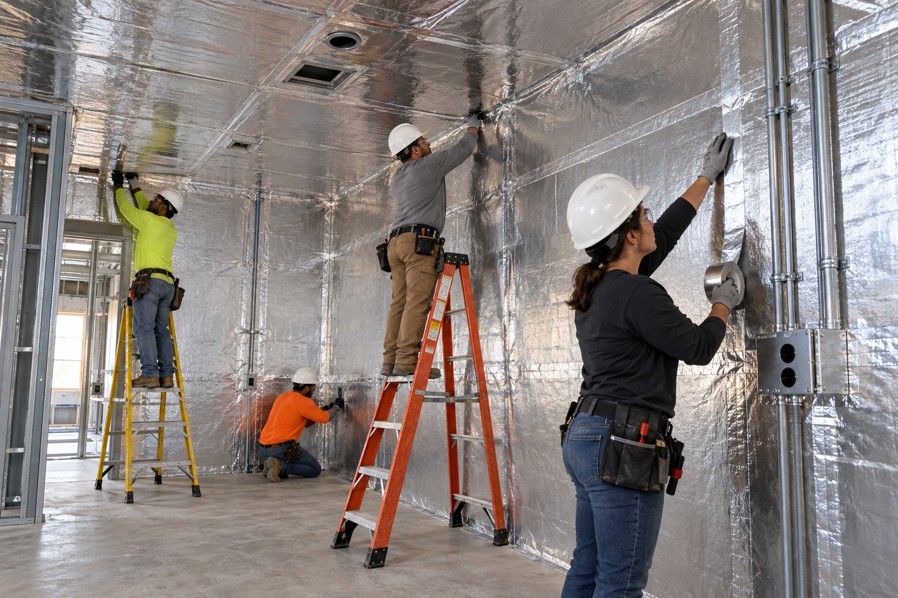
Continuous shielding depends on coordinated seams and penetrations
A secure space is not created by one product. Performance depends on how the floor, walls, ceiling, doors, penetrations, acoustic layers, shielding and finishes work together. A gap at a transition or a late change to a conduit can compromise an otherwise well-built assembly.
That is why the best time to involve a specialist is during design and preconstruction. Surface Solutions coordinates with architects, security officers, Certified TEMPEST Technical Authorities, security engineers and general contractors to align the details before crews mobilize. The work can include envelope details, shielding layouts, seam strategy, grounding and bonding notes, moisture recommendations, and coordination for doors, HVAC, conduits and other penetrations. [4]
Capabilities that reduce project risk
RF shielding systems Continuous copper or silver wall and ceiling systems, rigid galvanized floor shielding, conductive tapes and sealants, RF-rated doors and coordinated grounding and bonding strategies.
Acoustic performance Sound-rated walls and ceilings, insulation, decoupling, high-mass barriers, perimeter sealants, and careful treatment of doors, glazing and penetrations.
High-performance flooring Moisture mitigation, leveling, conductive or static-dissipative adhesives, and compatible finishes that protect sensitive equipment and preserve the secure envelope.
Secure doors and interfaces Professional installation of acoustic and RF-rated doors and frames, integrated with adjacent walls, floors, ceilings and hardware.
Testing and documentation support Material records, manufacturer data, construction photos, as-built notes and coordination for RF, acoustic and intrusion-related validation.
A contractor built around customer needs
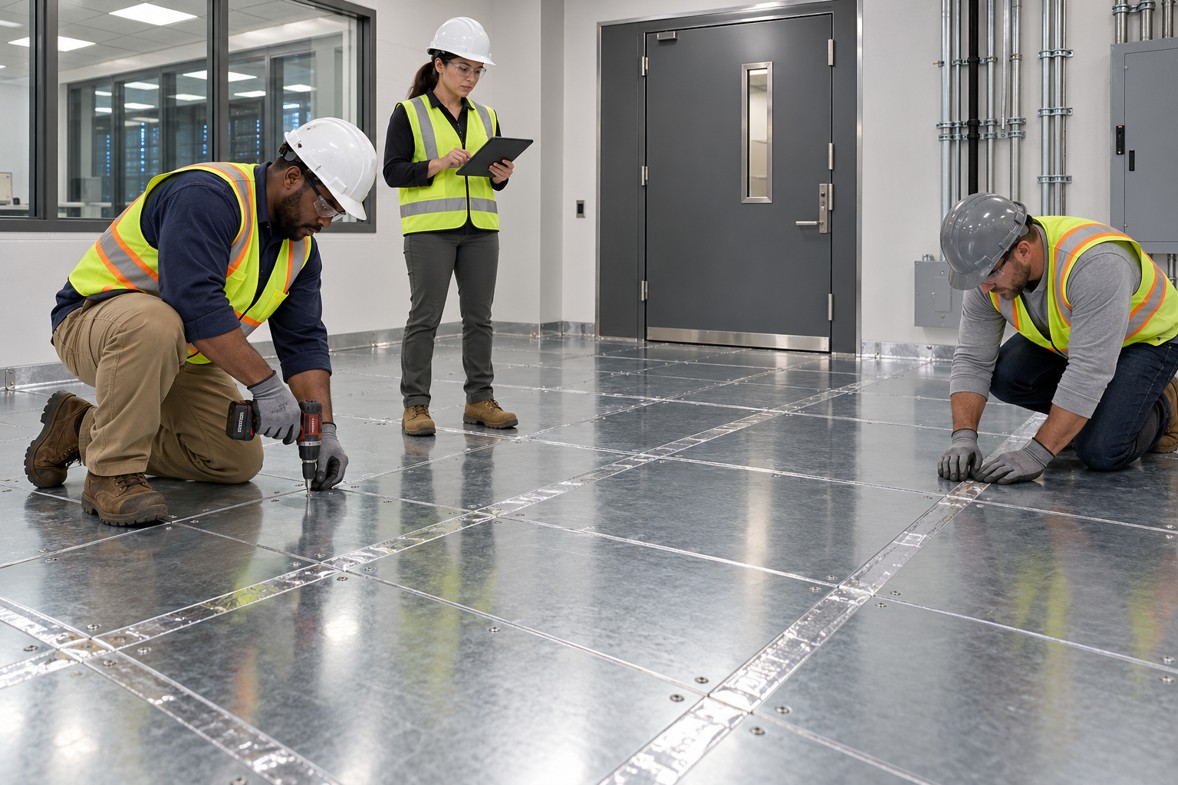
Rigid galvanized floor panels and documented workmanship support continuity and long-term performance
Surface Solutions can enter a project at design, construction or remediation. The value is different for each customer, but the objective remains the same: lower interface risk and deliver work that is ready for the next inspection, test or construction phase.
| Customer | How Surface Solutions helps |
|---|---|
| General contractors and primes | Adds a specialized trade partner that can coordinate interfaces, execute critical assemblies and provide closeout documentation. |
| Architects and security teams | Brings constructability input to shielding, acoustics, floors, doors and penetrations before details become field conflicts. |
| Owners and mission teams | Aligns installation with the required performance, schedule, operating constraints and long-term maintenance needs. |
| Facility and operations teams | Assesses RF leakage, slab moisture, failed assemblies and as-built deviations, then targets repairs to reduce disruption. |
| Critical environment operators | Supports data centers, laboratories, MRI suites, secure meeting areas and other spaces that need acoustic, RF or controlled-environment performance. |
A consistent delivery path
1 Define the performance need Confirm the mission, design criteria, testing expectations, operating constraints and responsible stakeholders.
2 Coordinate the envelope Resolve floor, wall, ceiling, door, penetration, grounding, acoustic and finish interfaces.
3 Install the critical layers Use trained crews, compatible materials and documented procedures for shielding, flooring and acoustic assemblies.
4 Verify and document Capture construction records, address deficiencies and support testing, closeout and approval activities.
The best time to engage a secure space contractor
Early involvement gives the project team more options. It can prevent a finish selection from conflicting with shielding, identify slab moisture before flooring is installed, preserve continuity around penetrations, and give long-lead doors or specialty materials enough time to arrive. It also allows the security and construction teams to agree on documentation before the work is concealed.
Bring Surface Solutions into the project when
The design is still developing Use design-assist coordination to make performance requirements constructible and avoid unnecessary over-specification.
A general contractor is assembling the trade team Define the specialized scope, responsibilities, interfaces and submittal needs before award.
Construction is approaching critical transitions Coordinate seams, penetrations, doors, grounding, flooring and sound-rated assemblies before they are covered.
Testing reveals a problem Investigate RF leakage, acoustic weakness, moisture failure or as-built deviations and develop a targeted correction plan.
An existing facility must be upgraded Plan improvements around operational constraints and preserve as much compliant work as practical.
A strong position in the federal and defense market
Surface Solutions is based in Sterling, Virginia, near one of the country’s largest concentrations of federal agencies, defense contractors, intelligence programs, technology firms and specialized construction partners. That location supports close coordination in the Washington metropolitan market while the company’s systems and partnerships can serve secure and critical-environment work more broadly.
Partnerships with shielding and flooring specialists, including R.A. Mayes and UZIN, help connect design intent with tested materials, compatible assemblies and manufacturer-supported installation practices. [4]
Information that helps a project move faster
Current drawings and specifications Provide the latest architectural, mechanical, electrical, security and finish information, including addenda or known revisions.
Performance and approval requirements Identify the responsible security stakeholders, required tests, documentation expectations and any governing technical criteria.
Schedule and access constraints Share bid dates, mobilization targets, phasing, occupied-area restrictions and long-lead concerns.
Known conditions Note slab moisture, existing penetrations, prior test results, failed assemblies or areas that cannot be disturbed.
Start with the risk that matters most
A productive first conversation does not need a complete design. Share the project type, location, schedule, current drawings, expected performance, known constraints and the construction phase. Surface Solutions can help identify the interfaces that need attention, define a practical scope and determine the right next step.
Discuss a secure space project with Surface Solutions
People Training Service Growth
Sources
1 General Services Administration Facilities and construction category annual spending
2 Congressional Budget Office Department of Defense 2026 budget request analysis
3 Department of Defense Secure Space Network announcement September 2026